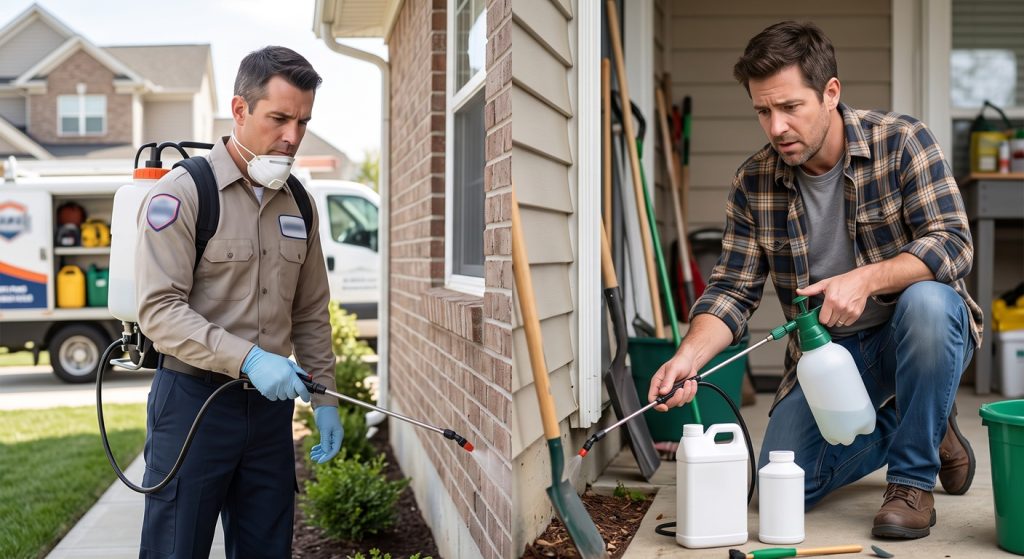
Pest control cost splits into two different questions, and companies prefer that buyers never separate them. The first is what it takes to kill the pests already in the house. The second is what it takes to keep new ones out, which is where subscriptions, quarterly visits, and auto-renewing contracts live. A homeowner who prices the two separately usually spends less than one who signs whatever the first technician offers.
Pest control cost: what companies charge
A one-time visit for common pests such as ants, spiders, or roaches runs $100 to $500, with most jobs landing between $100 and $300. Recurring plans are priced to look small: $40 to $80 per month, or $100 to $300 per quarterly visit, usually with an initial visit at $150 to $300 that covers the first inspection and treatment. Over a year, a standard plan puts the annual pest control cost between $300 and $900.
Specialty pests sit in their own price class. Termite work starts at a few hundred dollars for a localized liquid treatment and climbs past $2,500 for bait systems or fumigation on a serious infestation. Bed bugs cost $150 to $400 per room with chemicals, spread over repeat visits, and whole-home heat treatment moves into the thousands. Rodent jobs often add $300 to $600 for exclusion work, meaning the sealing of entry points, on top of trapping.
The number that matters most in a recurring plan is not the monthly fee. It is the retreatment guarantee. A plan that sends a technician back free between visits when pests return is buying something real. A plan that charges for callbacks is a series of one-time visits with a contract attached.
What DIY costs and where it wins
The supply list for most household pest problems is short and cheap. Gel bait for ants and roaches, snap traps for mice, a tube of caulk, steel wool, and a door sweep together cost less than a single professional visit. For light problems caught early, that kit plus patience gets results a technician would charge $200 to deliver.
DIY wins hardest at prevention, and prevention is most of the game. The framework professionals train on is public: the EPA’s guidance on integrated pest management puts inspection, sanitation, and exclusion ahead of any spraying, with pesticides used last and in targeted amounts. In a kitchen, that means sealed food containers, crumbs cleaned nightly, and gaps around pipes closed with steel wool and caulk. It also means fixing water, because roaches follow moisture more reliably than food. A dripping trap or a slow drain feeds an infestation, and basic kitchen sink troubleshooting removes what keeps them coming back.
Where DIY stops working
Some jobs fail at home no matter how careful the work. Termites top the list: the termiticides that work are restricted to licensed applicators, the colony is underground or inside walls, and a missed treatment shows up years later as structural repair. Bed bugs resist most consumer sprays and hide in places a can never reaches, which is why the professional fix leans on heat and repeat visits. Large rodent infestations, wasp nests inside wall voids, and anything above ladder height belong on the same list for plain safety reasons.
Total-release foggers deserve a specific warning. They rarely reach the cracks where roaches and bed bugs hide, they can scatter an infestation deeper into a building, and overuse has sent people to emergency rooms. More product is not more effective, and the pesticide label is a legal document, not a suggestion.
For the jobs on this list, an inspection before a quote is the mark of a serious company. National firms such as Orkin inspect first and put a retreatment guarantee in writing, and any company quoting a termite job over the phone, sight unseen, is guessing with someone else’s house.
The health side of the decision
Speed matters more with some pests than others. Rodents contaminate food and spread disease through droppings, urine, and nesting material, and the CDC’s rodent control guidance is blunt about cleanup: never vacuum or sweep droppings, since stirred dust can carry virus into the air, and disinfect before wiping anything up. The same guidance favors snap traps over glue or live traps and reserves poison bait stations for infestations that persist. A mouse problem that has reached the pantry is not a project to save money on slowly. Waiting is the expensive option.
Keeping pest control cost down
Three quotes change the math more than any coupon, since pricing for the same treatment can vary by more than double between companies in one town. Ask each one what the plan excludes, because general plans almost never cover termites, bed bugs, or full rodent exclusion, the three most expensive problems a house can have. Match the plan to the problem: a single wasp nest or one spring ant trail needs a visit, not a subscription. And read the renewal terms before signing, since many contracts auto-renew and some charge a fee to leave early. The cheapest structure for many households is a one-time knockdown treatment followed by DIY prevention, with a plan reserved for homes under constant pressure from climate or surroundings.
Before hiring or spraying, check six things
- Identify the pest first, since carpenter ants and termites get confused and the treatments differ completely
- Get three itemized quotes and confirm license and insurance for the specialty jobs
- Ask what the plan excludes and what a callback between visits costs
- Read the auto-renewal and early cancellation terms before signing anything
- For DIY, follow the pesticide label exactly and skip total-release foggers
- Seal entry points while the problem is small, since mice fit through a gap the width of a pencil
Pest control cost FAQ
How much does pest control cost per month?
Monthly plans run $40 to $80 in 2026, with the initial visit billed separately at $150 to $300. Quarterly service prices at $100 to $300 per visit and usually totals less across a year. The plan is worth its fee when it includes free retreatments between visits, and worth much less when it does not.
Is DIY pest control as effective as hiring a professional?
For prevention and light problems, yes: sanitation, sealing, gel baits, and snap traps solve most early issues for the price of hardware. For termites, bed bugs, and established rodent infestations, no, since the tools that work are restricted, the pests hide beyond reach, or both.
Why is termite treatment so expensive?
The colony is hidden, the effective chemicals are limited to licensed applicators, and the treatment has to cover the structure rather than the visible insects. Prices start around a few hundred dollars for spot liquid work and pass $2,500 for bait systems or fumigation, which is still cheaper than the framing repairs a missed colony causes.
Do you need a quarterly pest control plan?
Homes with year-round pest pressure from climate, woods, or neighbors get real value from one, mostly through the retreatment guarantee. A house with one problem a year does better paying for single visits and putting the subscription money into sealing and sanitation.